
6.6 KiB
DeepDive into Liquid: Part II - Asset Creation and Configuration
This is a multipart DeepDive that will focus on the Liquid Sidechain. It will be released in 3 Parts:
- Part I: Overview, Installation, and first Peg-In
- Part II (this): Asset Creation and Configuration
- Part III: Advanced Topics and Peg-out
Assets
In Part I, we succesfully Pegged-In our BTC and received L-BTC, now lets use that L-BTC to do some interesting things with Asset Issuance:
-
Let's begin by checking out these 2 commands1:
$ sudo ./scripts/app compose elements exec node elements-cli -rpcuser=$E_RPCUSER -rpcpassword=$E_RPCPASS getwalletinfo
"balance": {"bitcoin": 0.00149155}
$ sudo ./scripts/app compose elements exec node elements-cli -rpcuser=$E_RPCUSER -rpcpassword=$E_RPCPASS dumpassetlabels
{"bitcoin": "6f0279e9ed041c3d710a9f57d0c02928416460c4b722ae3457a11eec381c526d"}
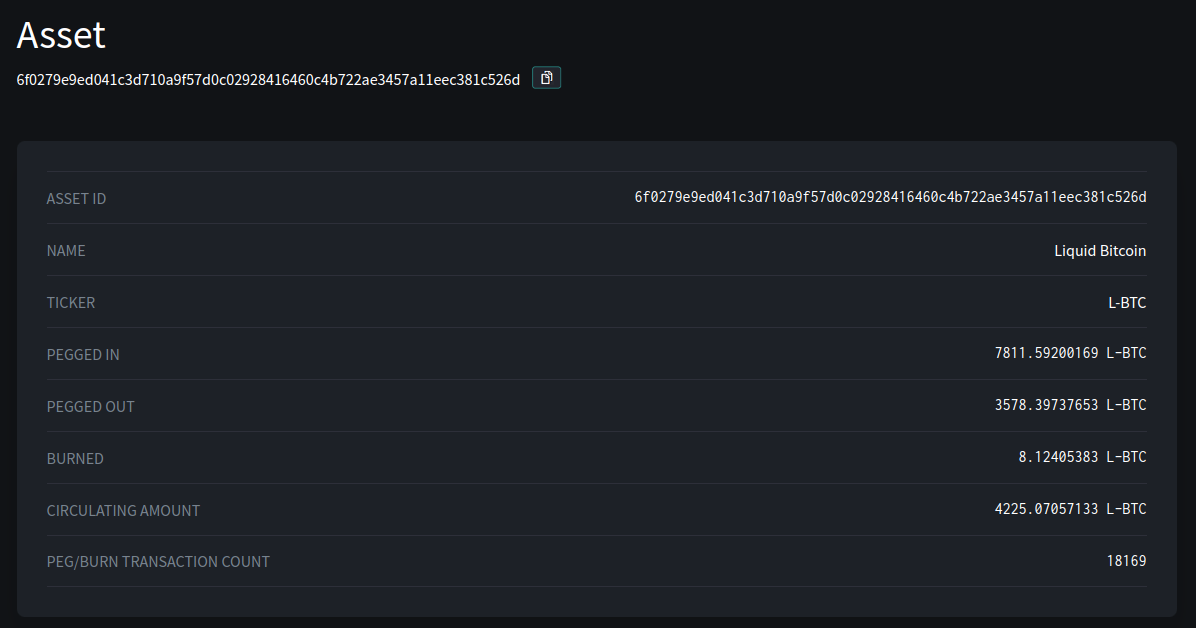
This is telling us that bitcoin is a label for an asset that has the UUID of 6f0279e9ed041c3d710a9f57d0c02928416460c4b722ae3457a11eec381c526d. Everything in Liquid is an 'Asset' (including L-BTC) and each of these Assets can have different features, issuance, and restrictions.
Looking up this value on https://blockstream.info/liquid/assets we can see info about it like its ticker, name, and circulating supply:
Issuing our own Asset
-
Issuing our own asset is straight-forward, as its a single line command in the client. Let's issue 10 new tokens and set the supply to be fixed (no re-issuance)
$ sudo ./scripts/app compose elements exec node elements-cli -rpcuser=$E_RPCUSER -rpcpassword=$E_RPCPASS issueasset 10 0 true
{ "txid": dd3983619f67e7a743ccfd32e48bbdb591c1d44b86a71d442be95a2453c0479a, "vin": 0, "entropy": cd3d7319525b28b6500d0a0b4688d91392ba8192be9bc264ec9637a001907322, "asset": 1e69f87952c26b8dfc80dda0427041a0279a0723ea12086b88b75752545e0d22, "token": 2dc5fb795fd42e08adb9dd29b5ff14f4326ecd8443e1cdc31dc6666d7576ff89 }
-
Checking out our wallet we see:
$ sudo ./scripts/app compose elements exec node elements-cli -rpcuser=$E_RPCUSER -rpcpassword=$E_RPCPASS getwalletinfo
"balance": {"1e69f87952c26b8dfc80dda0427041a0279a0723ea12086b88b75752545e0d22": 10.00000000,"bitcoin": 0.00148701}
-
We can see our wallet has 10 of our assets2, lets checkout what the Liquid network knows about it:
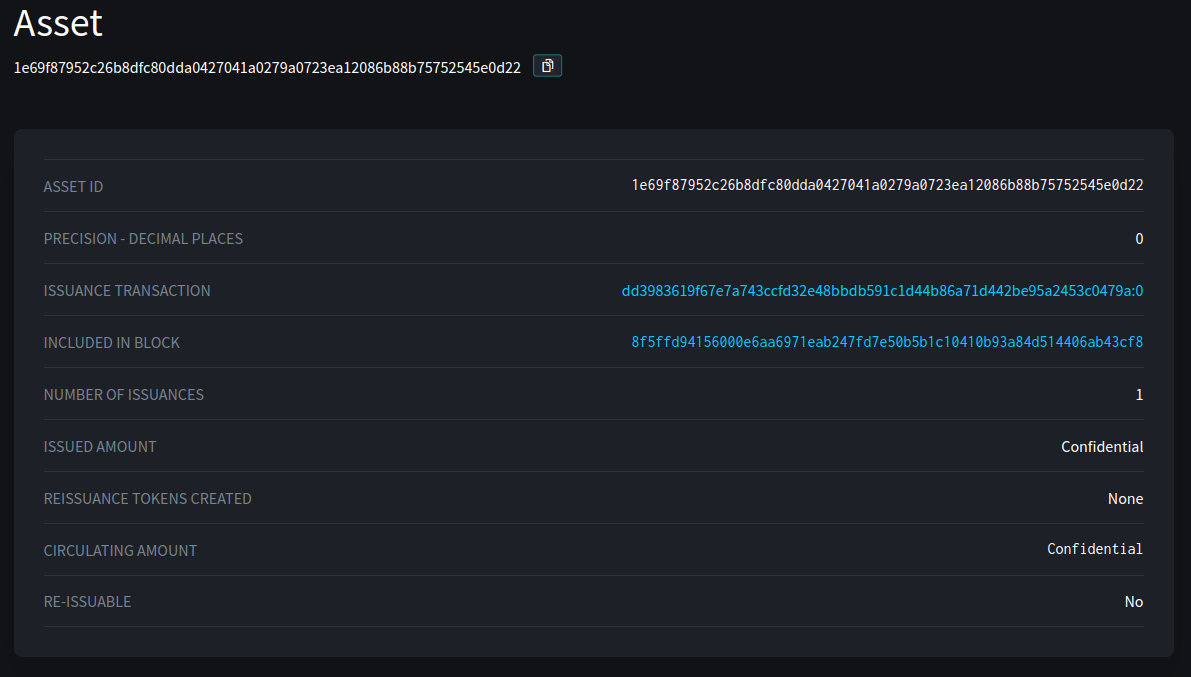
- So publiclly we know the following about our new asset:
- It cannot be re-issued
- It has only been issued once
- However both the issued amount and the circulating supply has been hidden from us.
Issuing a Non-Confidential Asset
-
Let's create another asset and this time choose a different option (specifically, lets create this asset unblinded):
$ sudo ./scripts/app compose elements exec node elements-cli -rpcuser=$E_RPCUSER -rpcpassword=$E_RPCPASS issueasset 10 0 false
{"txid": "1dfdf2f3a393a7a7be9f1f58c8651565a29486851268027794e1b69f5227864f", "vin": 0, "entropy": "5a32df406eb3f8c4f9b59c669d411e3a5ed0fd75058c2483e5732ccc6b482722", "asset": "03d63d6c373979954a4dda2afdd941a0de96a0739da455af1cdb1a2e2a63a9a5", "token": "ac860f370aabb829b70283c05e13a327cccec8ad0eea5493980cca53dd6631f9"}
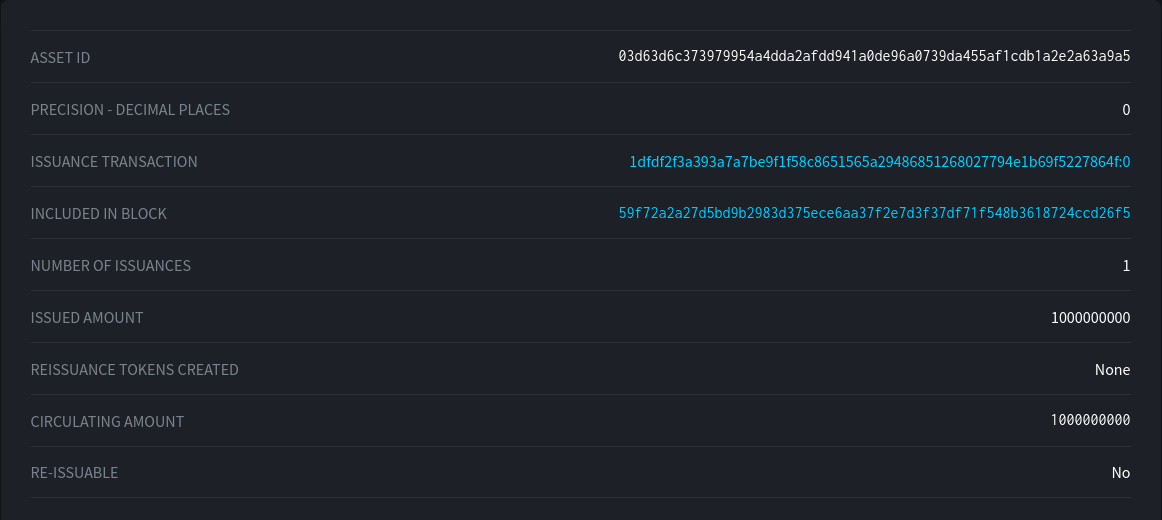
...and checking again what the Liquid network knows about it
-
Now we can see the total issued amount / supply2
-
Let's try sending this new unblinded asset to another wallet (my Blockstream Green mobile wallet) and see what is visible on the network.
$sudo ./scripts/app compose elements exec node elements-cli -named -rpcuser=$E_RPCUSER -rpcpassword=$E_RPCPASS sendtoaddress address="VJL6Thq......" amount=1.0 fee_rate=1 assetlabel="03d63d6c...."
edf087368703bbb99054b4c5d7d1a85a9fbc4ad1ba9eac97c71463eb822dea3b
-
Looking up this transaction on the block explorer, we see:
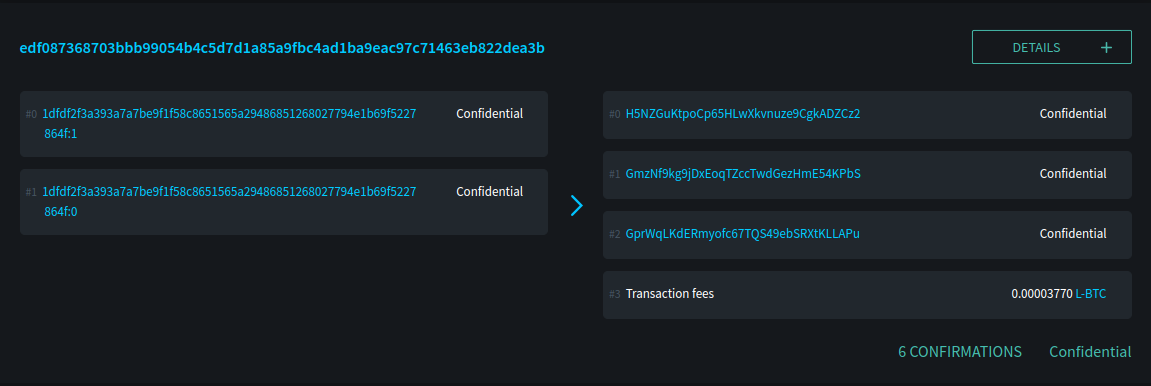
This is interesting: So although the transaction is visible, we can't see what was actually transferred (even though the details of the asset are visible, it is still hidden inside the transaction). Further, where is my Green Wallet address (ie. VJL6Th...)? We can see 3 output addresses, presumably these are: Change, Fee, and Receipiant...but which is my Green Wallet?
- Let's look up my Green Wallet address directly in the explorer:
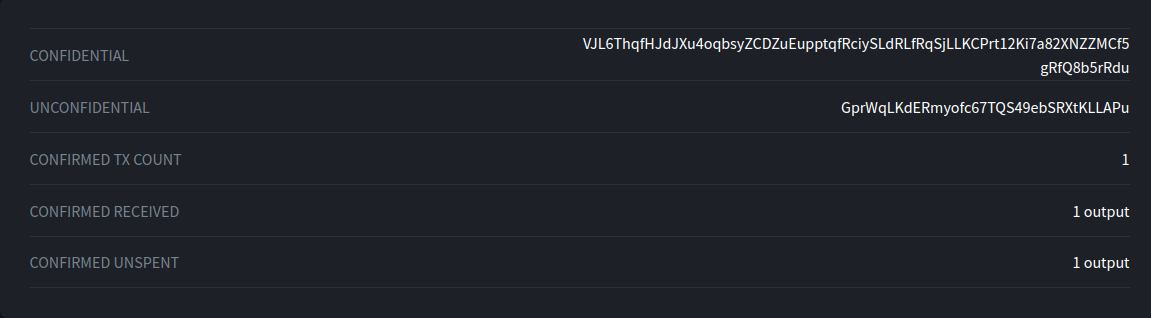
So now this shows us that the Confidential Address: VJL6Thq.... corresponds to the Unconfidential Address: GprWqLK.... Through the magic of one-way hashes, if we know the "Confidential" address we can then dervive its public address....however just by looking at the public blockchain, there is no way to reverse that hash.
Now, lets look at how things look on the Green mobile wallet:
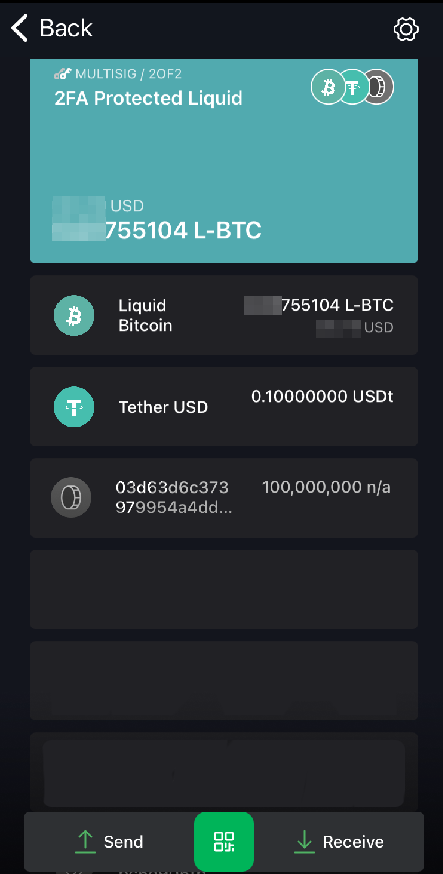
We can see that we've received 100,000,000 'sats' of our custom asset. However, notice how there is no labels. The elements for L-BTC, USDT, etc show with ticker symbols...whereas ours is showing just the contract address....not very user friendly. Let's see if we can remedy.
Registering our Asset
The publication of asset metadata info on Liquid works on a .well-known system where specific files are published on a webserver that you control. There are a few different steps to accomplish this, so lets begin
-
The first step is we need to generate a
legacyaddress in case we ever want to delete the asset from the registry later3sudo ./scripts/app compose elements exec node elements-cli -rpcuser=$E_RPCUSER -rpcpassword=$E_RPCPASS getnewaddress "" legacy
lq1qq2s92z0uq78kd4gfepua6qvfwx40g4lqqer9e3tzrr0j04ugyzsed39mnh9wvuhw0hmaqy5mxs9egqrr7j3rx8j2sdyun9m90
-
The values E_RPCUSER and E_RPCPASS, where environmental variables we set in Part I ↩︎
-
Like in bitcoin, 1 integer unit is 100,000,000 base units (not sats, but equivalent concept) ↩︎
-
Using a legacy address for this task imposes no real implications to your security since its only used to remove assets from the registry. Its possible to do this with a non-legacy address, but more steps are involved and we will need to use other tools rather than what's already built-in to Elements node, so we will just use a legacy address for this. ↩︎